Il concerto è dedicato alle nuove frontiere della dimensione spaziale elettroacustica.Grazie a una call internazionale rivolta a giovani compositori under 40, sono state selezionate alcune delle opere più significative tra le 126 proposte ricevute da oltre 30 Paesi di tutti i continenti, a dimostrazione che l’interesse per la dimensione spaziale della musica è un fenomeno planetario. Le composizioni presentate si distinguono non solo per l’uso avanzato di tecnologie immersive – dalla quadrifonia al Dolby Atmos e Ambisonic – ma soprattutto per il loro valore musicale. In programma anche una prima esecuzione assoluta di Maurilio Cacciatore.
Concerto dei lavori selezionati dalla call per opere elettroacustiche con spazializzazione multicanale
| Tahasin Tolga Yayalar (TR, 1973) |
Impulse Impromptu III (2025 - 7.1.4) |
| |
|
| Candra Bangun Setyawan (IDN, 1993) |
Radjutan (2025 - 8 ch) |
| |
|
| Lorenza Ceregini (IT, 1999) |
Reti (2024 - 8ch) |
| |
|
| extra call: Maurilio Cacciatore (1981) |
Il peso del cielo*(2025) |
| |
violino solista, un altro violino e live electronics |
| |
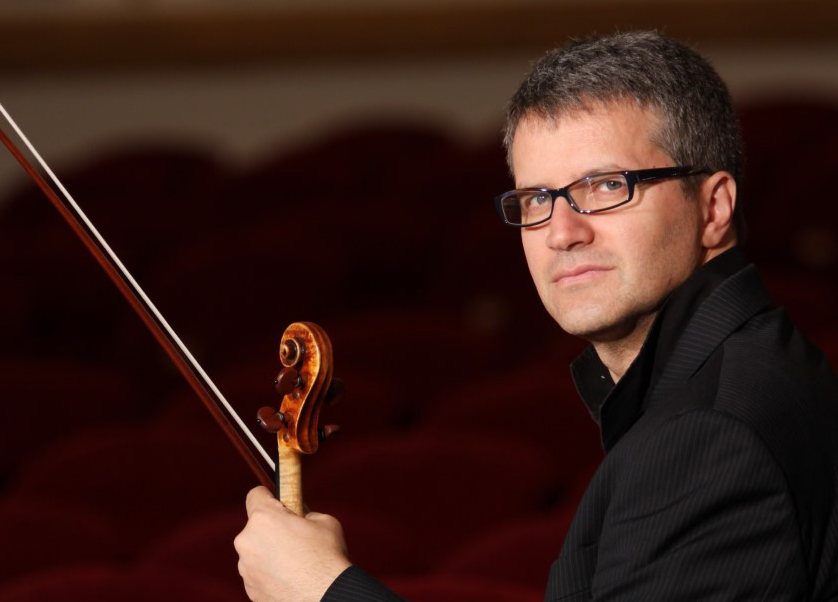
Francesco D’Orazio violino
Maurilio Cacciatore live electronics |
| |
|
| Spiff Onyuku (NG, 1989) |
Vibrant Echoes (2024, 7.1 ch) |
| |
|
| Jiajing Zhao (CHN, 1996) |
FOMO (2025 - 16 ch) |
| |
|
| Kyle Vanderburg (USA, 1986) |
Tempest in a Teakettle (2016 - 4 ch) |
*prima esecuzione assoluta
Impulse Impromptu III
The third installment in the Impulse Impromptu series explores the sonic world of the musical box—an object both delicate and mechanical, nostalgic and uncanny. The piece is built entirely from musical box sounds, recorded in detail and expanded beyond their usual roles.
True to the series’ focus on improvisation and exploration, the process began with improvisations: tapping, winding, scraping, and playing in conventional and unconventional ways. These recordings became inspiration and raw material. Through sampling and electronic manipulation, they were shaped into new virtual instruments, enabling a second phase of improvisation in an electroacoustic space.
My first fixed-media piece, composed in 2000, also drew on a musical box. Twenty-five years later, Impulse Impromptu III revisits that early fascination, becoming both an exploration of sound and a personal, nostalgic return. Tahasin Tolga Yayalar
Radjutan
This work adopts a spectromorphological framework as both the analytical and compositional foundation in sound design. This approach positions the dynamic interaction between spectrum, morphology, and spatial dimensions as the main strategy for integrating sonic diversity. The primary aim of this work is to construct sonic aggregates rather than a series of fragmented musical gestures. At the same time, this approach serves as a response to my sense of fatigue toward pre-recorded music practices that tend to emphasize the exploration of timbre and space at the expense of musical quality. Through the exploration of fluid and interrelated sonic diversity, this work seeks to open new perceptual possibilities for the listener, where the boundaries between sonic elements become blurred, forming an ever-changing sonic landscape. Compositionally, each sound material is treated as an integral component within a mutually defining timbral-morphological structure, shaping a sonic texture in which transformations occur continuously and without segmentation. Candra Bangun Setyawan
Reti esplora il concetto di stratificazione e silenzio.
Invita l'ascoltatore a riconoscere le sfumature all'interno della trama sonora, costruita su sovrapposizioni tonali e pulsazioni irregolari. Il brano alterna densità e silenzio, incoraggiando l'esplorazione di contrasto e
connessione nelle sue mutevoli strutture interne. Lorenza Ceregini
Il peso del cielo per violino solista, un altro violino e live electronics
Le leggi della fisica stabiliscono che ciò che è più pesante, attratto dalla forza di gravità, tenda verso il basso, mentre ciò che è più leggero si innalzi verso l’alto. In questo brano, concepito per un sistema di amplificazione 11.4.2, cerco deliberatamente di sovvertire questo principio, creando uno spazio sonoro chiuso attraverso il susseguirsi di suoni e texture che si stratificano e si inseguono.
Il violino dialoga fin dall’inizio, in acustico, con un secondo violino di sintesi, diffuso all’interno dello strumento stesso. A tratti si percepisce l’illusione di un duo; altre volte sembra di ascoltare un trattamento in tempo reale irradiato dalla cassa armonica. Ma ogni volta che il violino reale tenta di imporsi come unico protagonista, l’elettronica interna lo richiama al suo percorso di continua, ostinata dipendenza. Il brano, dedicato a Francesco D’Orazio, è stato pensato per tutti coloro che, alzando lo sguardo al cielo, non giocano più con le forme delle nuvole, ma percepiscono il peso dei droni che piombano dall’alto e devastano le loro città, le loro case, le loro vite. Maurilio Cacciatore
Vibrant Echoes è un’opera elettroacustica che rilegge un antico rituale africano volto a placare le divinità contro la forza della Natura, trasformandolo in metafora della condizione umana attuale. Il testo, in più lingue, denuncia la crisi ambientale globale e invita l’umanità ad allinearsi all’ordine cosmico, cercando redenzione attraverso umiltà e unità. La composizione fonde tre fonti sonore: il kalangu (talking drum), la voce del compositore in dialetto Kwale, italiano e inglese, e suoni elettronici. Nel paesaggio sonoro il town-crier richiama il villaggio e trasmette il messaggio del chief-priest: attenzione ai segnali dei Cieli, è tempo di cambiare. Il talking drum, capace di imitare la voce umana, un tempo serviva per comunicare tra villaggi, rafforzando il senso di comunità. L’opera ne recupera la funzione simbolica di guida e ammonimento.
FOMO is an AI-aided acousmatic work exploring the anxiety of “Fear of Missing Out” in an age saturated by digital information. Its sonic material is generated through two AI processes: a custom model trained on audio from a continuous screen recording of YouTube Shorts, functioning both as an oscillator and as a tool to transform everyday sounds; and AI-generated poems by ChatGPT and DeepSeek, voiced through text-to-speech and built from attention-grabbing phrases that mirror the restless pull of online platforms. These materials are combined with social-media sounds used in training the model, along with mouse clicks and electromagnetic recordings. Working with AI reflects the algorithmic systems that shape our digital experience, allowing the piece to probe the shifting relationship between human and machine. Through acousmatic and spatial techniques, FOMO expands flat, screen-based media into a three-dimensional environment, turning overwhelming data streams into an embodied, disorienting listening space. Jiajing Zhao
Tempest in a Teakettle
The title points to the small, everyday problems that quietly accumulate as we wait. Waiting is explored through sound as ordinary moments are gradually brought into focus. The piece opens inside a teakettle poised for a storm as rain and wind fill the sonic space. Soft rainfall and distant thunder build into a restless tempest, eventually yielding to fragile harmonies drawn from a storm siren. These sounds reflect the obsessive vigilance of waiting—for the storm to arrive, to pass, and for what follows. As the sirens fade, the kettle reaches a boil unnoticed, and the unease of waiting collapses the scale between vast tempest and mundane object. Kyle Vanderburg

in collaborazione con Azienda Speciale Palaexpo - Il Mattatoio Roma
Condividi